
The MCP Foundation: Vertical Integration That Actually Works
The MCP Foundation: Vertical Integration That Actually Works. A2A: Horizontal Orchestration for Enterprise Reality. The Power of Protocol Convergence.
The MCP Foundation: Vertical Integration That Actually Works
Model Context Protocol, launched by Anthropic in November 2024, solved the fundamental problem of agent-tool integration through elegant simplicity [1]. Built on JSON-RPC, MCP establishes secure, two-way connections between AI models and external resources via a clean client-server architecture.
The genius lies in its universal tool invocation approach. Instead of each agent needing custom integrations for every service, MCP provides pre-built servers for Google Drive, Slack, GitHub, and Postgres [1]. An agent can access real-time context from any MCP-compatible service without the brittle custom code that plagued earlier implementations.
Early production adopters like Block, Apollo, Zed, Replit, and Sourcegraph proved MCP's viability at scale [1]. As Block CTO Dhanji R. Prasanna noted: "Open technologies like MCP are bridges connecting AI to real-world apps" [1]. The protocol's typed data exchange reduces hallucinations while improving code generation—critical for production reliability.
The key insight: MCP treats tools as first-class citizens with standardized interfaces, much like how modern APIs revolutionized web development. This vertical integration creates the foundation for agents that can actually accomplish real work.
A2A: Horizontal Orchestration for Enterprise Reality
While MCP solved the tool problem, Agent-to-Agent Protocol (A2A) tackled the harder challenge of inter-agent coordination. Announced by Google in April 2025 with backing from 50+ companies, A2A standardizes peer-to-peer agent communication using a sophisticated but practical approach [2].
The protocol's Agent Cards system—JSON-based capability advertisements—enables dynamic discovery and delegation [4]. Agents can find specialists, negotiate task handoffs, and maintain secure communication channels using OAuth, PKCE, and TLS [2]. The task lifecycle management (submitted/working/completed) provides the reliability guarantees enterprise workflows demand.
Google VP Rao Surapaneni captured the value proposition: "A2A multiplies productivity gains" by enabling agents to collaborate rather than compete [2]. The protocol supports HTTP, SSE, and JSON-RPC for different communication patterns, from simple delegation to real-time streaming [4].
The breakthrough: A2A creates horizontal scalability for agent teams, similar to how microservices architecture enabled distributed systems to scale. Agents can specialize deeply while maintaining loose coupling through standardized interfaces.
The Power of Protocol Convergence
The real magic happens when MCP and A2A work together. MCP handles vertical integration (agent-to-tools), while A2A manages horizontal coordination (agent-to-agent) [3]. This creates layered orchestration that mirrors successful engineering team structures.
Consider a customer support scenario: An orchestrator agent receives a complex query and uses A2A to delegate to specialists—billing, technical, and policy agents. Each specialist uses MCP to access relevant tools: the billing agent connects to payment systems, the technical agent pulls from documentation databases, and the policy agent checks compliance rules [7].
The synergy is architectural. MCP provides the reliable tool access each agent needs to be effective, while A2A ensures smooth coordination without central bottlenecks. This combination enables what researchers call "swarm intelligence" with enterprise-grade reliability [3].
Production stacks now commonly integrate LangGraph, CrewAI, or AutoGen with both protocols, creating robust orchestration layers that handle real business complexity [7].
Building Production-Ready Agent Teams
The practical reality of deploying MCP and A2A reveals important patterns. Successful implementations follow a three-layer architecture: data layer (vector databases, knowledge graphs), service layer (Kubernetes, LLM APIs), and workflow layer (guardrails, human-in-the-loop controls) [7].
The most effective use cases mirror complex business processes that benefit from specialization:
Software Engineering Teams: A requirements agent gathers specifications via A2A, delegates to coding specialists who use MCP to access GitHub and testing tools, then coordinates with deployment agents for production releases [7].
Hiring Workflows: Sourcing agents find candidates, scheduling agents coordinate interviews through calendar APIs (MCP), while background check agents handle verification—all orchestrated through A2A delegation patterns [7].
Supply Chain Management: Demand forecasting agents share insights with inventory specialists, who coordinate with logistics agents accessing real-time shipping data through MCP-enabled APIs [7].
The key insight from production deployments: successful agent teams require both deep tool access and clear coordination protocols, just like human engineering teams.
Nordic Efficiency Meets Global Scale
From a Nordic perspective, the MCP/A2A combination offers particular advantages for resource-efficient development. Small, highly skilled teams can leverage these protocols to build applications that scale far beyond their size—a perfect fit for the Nordic model of doing more with less.
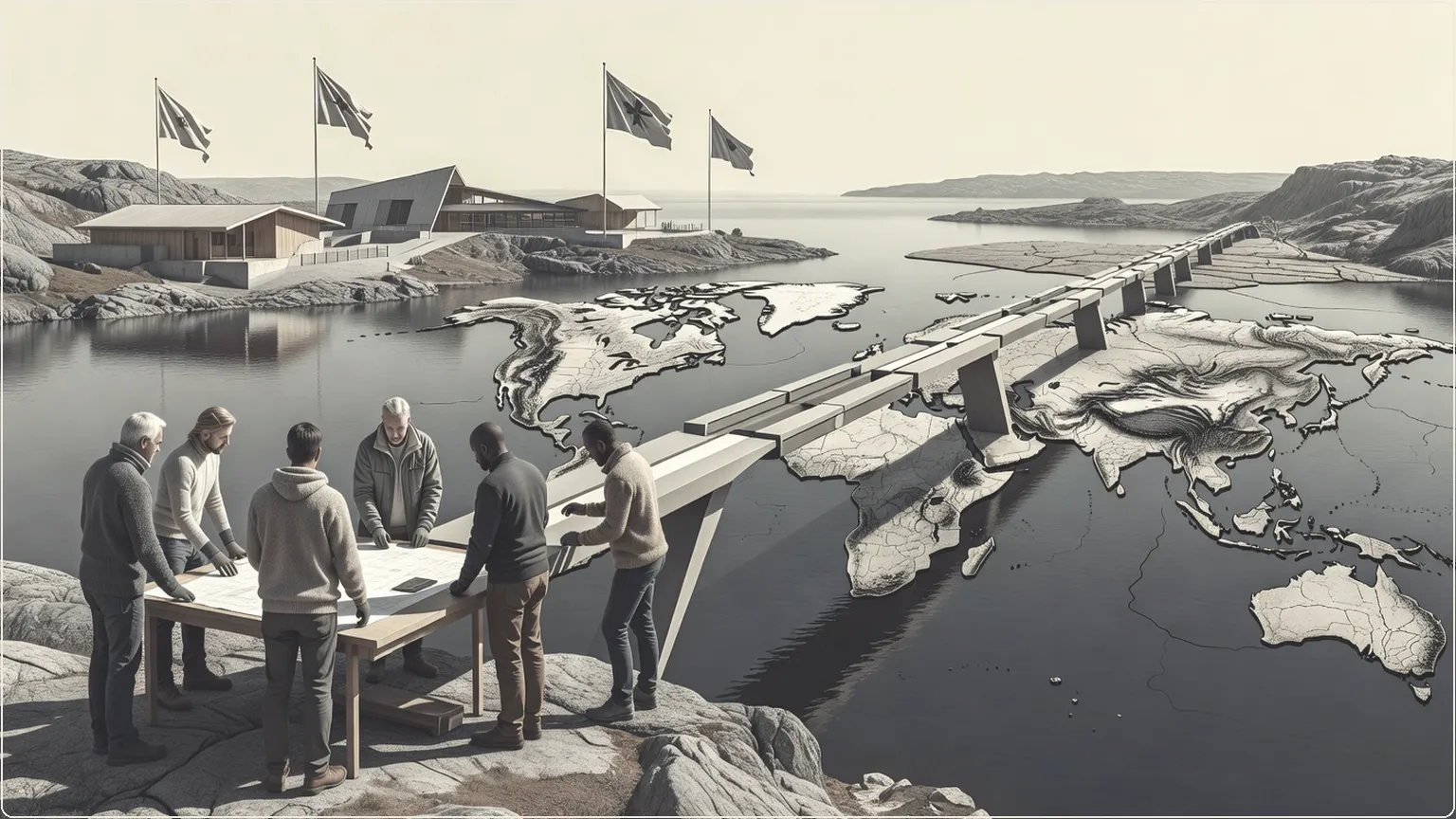
The protocols' emphasis on standardization over customization aligns with Nordic engineering values. Rather than building bespoke integrations, teams can focus on business logic while leveraging community-built MCP servers and A2A orchestration patterns.
For Nordic companies building on infrastructure like Telenor's cloud services, the protocols provide a path to global competitiveness through intelligent automation. A small team in Stockholm can deploy agent workflows that match the capabilities of much larger organizations.
Production Pitfalls and Hard-Won Solutions
Real-world deployments reveal common challenges and their solutions. Security remains paramount—both protocols provide scoped access controls and audit trails, but teams must implement proper credential management and monitoring [2][7].
Latency can kill user experience when agents make multiple A2A calls with MCP tool access at each step. Successful teams implement aggressive caching, parallel execution where possible, and fallback patterns for critical paths [7].
Debugging distributed agent workflows requires new tooling approaches. The most effective teams build comprehensive logging that tracks both A2A message flows and MCP tool invocations, creating visibility into complex orchestration patterns [7].
Cost management becomes critical as agents scale. Teams report success with usage-based throttling, intelligent caching of MCP responses, and careful optimization of A2A delegation patterns to minimize unnecessary LLM calls [5].
The Post-Code Era Accelerates
The convergence of MCP and A2A represents more than protocol standardization—it's infrastructure for the post-code era. When agents can reliably access tools and coordinate with each other, the bottleneck shifts from integration complexity to judgment about what should be automated.
This aligns perfectly with Up North AI's observation that "Code is free. Judgment isn't." The protocols handle the mechanical aspects of agent coordination, freeing builders to focus on the strategic decisions that create real value.
We're seeing early signs of this shift in Nordic companies that deploy agent teams for routine tasks while humans focus on high-leverage decisions. The protocols make this division of labor practical and reliable.
The implications extend beyond individual companies. As Google noted, "Universal interoperability is essential for collaborative agents" [2]. MCP and A2A create the foundation for agent ecosystems that span organizational boundaries—the beginning of a truly distributed, intelligent automation layer for the global economy.
The question isn't whether these protocols will succeed—the production adoption data makes that clear. The question is how quickly organizations will adapt their processes to leverage agent teams that can finally deliver on the promise of AI automation.
Sources
- https://www.anthropic.com/news/model-context-protocol
- https://developers.googleblog.com/en/a2a-a-new-era-of-agent-interoperability
- https://arxiv.org/html/2505.02279v1
- https://www.digitalocean.com/community/tutorials/a2a-vs-mcp-ai-agent-protocols
- https://www.clarifai.com/blog/mcp-vs-a2a-clearly-explained
- https://camunda.com/blog/2025/05/mcp-acp-a2a-growing-world-inter-agent-communication
- https://www.iguazio.com/blog/orchestrating-multi-agent-workflows-with-mcp-a2a
Want to go deeper?
We explore the frontier of AI-built software by actually building it. See what we're working on.