
The Protocol Landscape: MCP vs A2A Fundamentals
The Protocol Landscape: MCP vs A2A Fundamentals. The 25,000-Task Revelation: Sequential Beats Hierarchical.
Model Context Protocol (MCP) launched in November 2024 as Anthropic's answer to the integration nightmare plaguing AI applications [1]. Think of MCP as a universal adapter—it standardizes how AI agents access external data sources, tools, and systems through a clean client-server architecture. Instead of building custom integrations for every database, API, or file system, agents speak one protocol.
Agent-to-Agent (A2A) emerged from Google Cloud in April 2025 with a different focus: peer-to-peer agent communication [2]. Built on JSON-RPC 2.0 over HTTPS, A2A handles agent discovery, task negotiation, and collaborative workflows. Where MCP connects agents to tools, A2A connects agents to each other.
The distinction matters for architecture decisions:
- MCP excels at context integration: Your agent needs customer data from Salesforce, code from GitHub, and metrics from DataDog? One MCP server handles all three.
- A2A enables coordination: Your data analysis agent discovers a specialized forecasting agent, negotiates a task handoff, and receives structured results.
Most enterprise stacks will run both. MCP servers provide the tool layer while A2A orchestrates agent interactions above it [4].
The 25,000-Task Revelation: Sequential Beats Hierarchical
The most significant finding in multi-agent research came from an unlikely source: a massive empirical study that tested every assumption about AI team design [3][5]. Victoria Dochkina's team at MIPT ran over 25,000 task executions across 8 LLM models, testing everything from 4-agent teams to 256-agent swarms.
The core finding demolished conventional wisdom: Sequential coordination protocols consistently outperformed role-assigned hierarchical structures. When agents could self-organize through simple handoff mechanisms, they formed emergent hierarchies, specialized dynamically, and knew when to abstain from tasks outside their capability.
The numbers are striking:
- 44% higher success rates for sequential vs. hierarchical coordination
- Resilient scaling: Sequential processing maintained performance as agent counts increased
- Model agnostic: Even weaker models performed better with sequential protocols than stronger models in rigid hierarchies
Why does this matter for protocol choice? Because coordination protocols trump model selection and framework architecture. Your choice between Claude and GPT-4 matters less than enabling agents to discover each other and negotiate task handoffs through A2A-style protocols.
Framework Reality Check: LangGraph vs CrewAI in Practice
The protocol wars play out differently across orchestration frameworks. LangGraph (part of LangChain) has emerged as the pragmatic choice for complex, stateful workflows that need both MCP tool integration and A2A coordination [6].
LangGraph's stateful graph approach maps naturally to the sequential coordination patterns that the MIPT study validated. You can build adaptive workflows with branching logic, human-in-the-loop checkpoints, and dynamic agent discovery—all while maintaining observability.
CrewAI, despite its marketing appeal around "AI crews," represents the old paradigm of pre-assigned roles. The framework makes it easy to define a "researcher," "writer," and "editor" crew, but this rigid structure is exactly what the 25,000-task study proved inferior [6].
The adoption data supports this shift: LangGraph queries hit 27,000 monthly searches compared to CrewAI's 15,000, and enterprise implementations increasingly favor LangGraph's flexibility for production workflows [6].
For builders, the practical implication is clear: start with sequential chains in LangGraph, add A2A wrappers for agent discovery, and use MCP servers for tool access. Skip the role-based crew metaphors.
Enterprise Implementation: Beyond the Protocol Hype
Moving from proof-of-concept to production multi-agent systems requires solving problems the protocols don't address directly. Governance becomes critical when agents can discover each other and negotiate tasks autonomously.
The biggest operational challenge isn't technical—it's escalation loops. When your data analysis agent hands off to a forecasting specialist, who owns the result quality? How do you prevent hallucinated handoffs where agents pass tasks to non-existent services?
Observability tooling is catching up. Temporal's workflow engine now supports A2A protocol integration, giving you distributed tracing across agent interactions [7]. You can see exactly which agent made which decision, when handoffs occurred, and where failures originated.
The ROI case for multi-agent systems is becoming quantifiable. Enterprise benchmarks show 2-5x reliability improvements on complex tasks when proper coordination protocols replace monolithic AI workflows [6]. But this only holds when you avoid the hierarchy trap.
Nordic Perspective: GDPR-Compliant Agent Networks
European enterprises face unique constraints that make protocol choice consequential. GDPR compliance requires clear data lineage and processing accountability—challenging when agents autonomously discover and coordinate with each other.
MCP's client-server architecture provides natural audit boundaries. Each MCP server can log exactly which data sources an agent accessed, when, and for what purpose. This creates the paper trail GDPR audits demand.
A2A coordination adds complexity but remains manageable with proper governance. The key is treating agent discovery and task negotiation as logged, auditable events rather than opaque AI decisions.
Nordic enterprises are leading in hybrid human-AI governance models. Instead of fully autonomous agent networks, they're implementing approval workflows for certain agent discoveries and task handoffs. This maintains compliance while capturing the efficiency gains of protocol-driven coordination.
The Post-Hierarchy Future: What Changes When Agents Build the Workflows
The deeper shift isn't about MCP versus A2A—it's about abandoning human organizational metaphors for AI systems. The 25,000-task study proves that agents don't need job titles, reporting structures, or predefined roles. They need discovery mechanisms, handoff protocols, and clear task specifications.
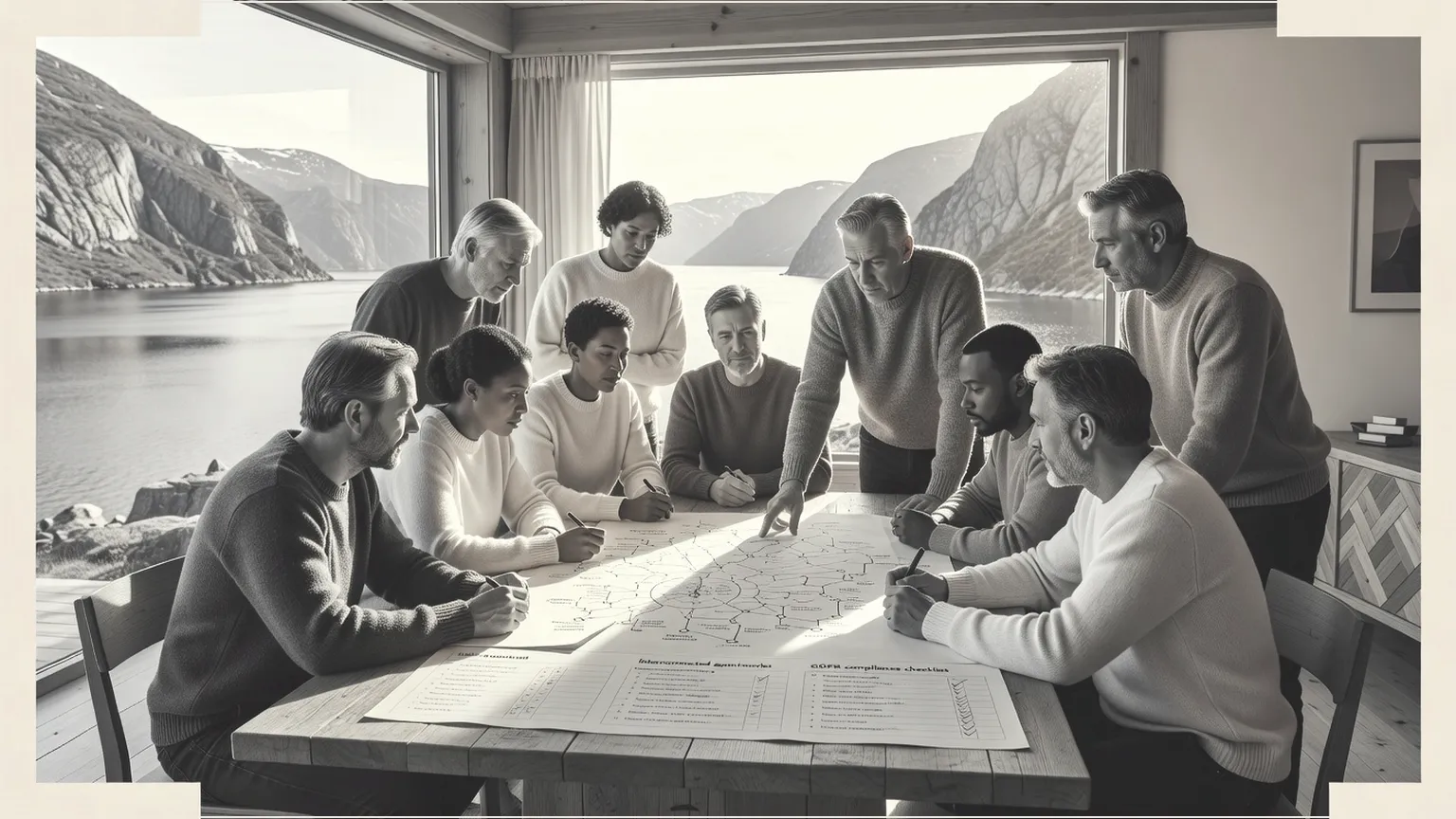
This has profound implications for how we build AI products. Instead of designing "AI marketing teams" or "AI development crews," we'll create capability pools that self-organize around tasks. An agent good at data analysis doesn't need to be permanently assigned to the "analytics team"—it can be discovered by any agent needing analytical capabilities.
The protocol wars will resolve through convergence rather than winner-take-all. MCP handles the tool integration layer, A2A manages agent coordination, and higher-level protocols will emerge for complex multi-step workflows. The Linux Foundation's Agentic AI Foundation, which now governs MCP, signals this collaborative direction [8].
For builders, the opportunity is immediate: the teams building sequential, protocol-driven agent systems today will have significant advantages over those still implementing hierarchical AI crews. The research is clear, the protocols are maturing, and the frameworks are ready.
The post-code era isn't just about AI writing software—it's about AI systems that organize themselves better than we ever could. The protocols enabling this coordination are becoming the new infrastructure layer. Choose wisely.
Sources
- https://www.anthropic.com/news/model-context-protocol
- https://developers.googleblog.com/en/a2a-a-new-era-of-agent-interoperability
- https://arxiv.org/pdf/2603.28990
- https://www.digitalocean.com/community/tutorials/a2a-vs-mcp-ai-agent-protocols
- https://ai.gopubby.com/your-multi-agent-framework-is-an-anti-pattern-25-000-tasks-prove-that-pre-assigned-roles-make-ai-e6ea31736ebd
- https://www.datacamp.com/tutorial/crewai-vs-langgraph-vs-autogen
- https://github.com/a2aproject/A2A
- https://www.anthropic.com/news/donating-the-model-context-protocol-and-establishing-of-the-agentic-ai-foundation
Want to go deeper?
We explore the frontier of AI-built software by actually building it. See what we're working on.