
Tesla Unifies Its AI Stack Across All Autonomous Features
Tesla Unifies Its AI Stack Across All Autonomous Features. Google Rebrands Vertex AI as Enterprise Agent Platform.
Tesla Unifies Its AI Stack Across All Autonomous Features
Tesla dropped FSD v14.3.2 yesterday, and buried in the update is something significant: they've unified the AI model powering Full Self-Driving, Actually Smart Summon, and their upcoming Robotaxi service [4][5][6]. This isn't just a software update—it's Tesla consolidating years of autonomous driving development into a single, coherent intelligence.
The immediate benefits are already showing: 20% faster reactions in some scenarios and dramatically improved phone-to-car responsiveness for Smart Summon. But the bigger play is obvious—Tesla is preparing a unified AI stack that can seamlessly transition between consumer vehicles and their robotaxi fleet.
This is how you build toward full autonomy: not with separate systems for different use cases, but with one model that learns from every Tesla on the road and applies that intelligence everywhere. The robotaxi business just got more real.
Google Rebrands Vertex AI as Enterprise Agent Platform
Google made a telling move at Cloud Next '26, essentially killing the Vertex AI brand and replacing it with the "Gemini Enterprise Agent Platform" [7][8][9]. The rebrand isn't just marketing—it signals Google's bet that the future of enterprise AI is agents, not models.
The platform now offers access to 200+ models, but the focus has shifted entirely to building, deploying, and managing AI agents at scale. Google is betting that enterprises don't want to fiddle with model selection—they want agents that can actually do work, with enterprise-grade security and governance baked in.
It's a smart pivot. While everyone else is racing to build better foundation models, Google is positioning itself as the platform where those models become useful business tools. The question is whether they can execute on the agent orchestration layer better than the startups already eating their lunch.
SpaceX Bets $60 Billion on AI Coding with Cursor Option
In perhaps the wildest move of the week, SpaceX secured a $60 billion option to acquire AI coding startup Cursor, while Elon Musk's xAI enters three-way talks with Cursor and Mistral to challenge OpenAI's dominance in coding agents [10][11][12]. This isn't just an acquisition—it's Musk making a massive bet that AI will replace traditional software development.
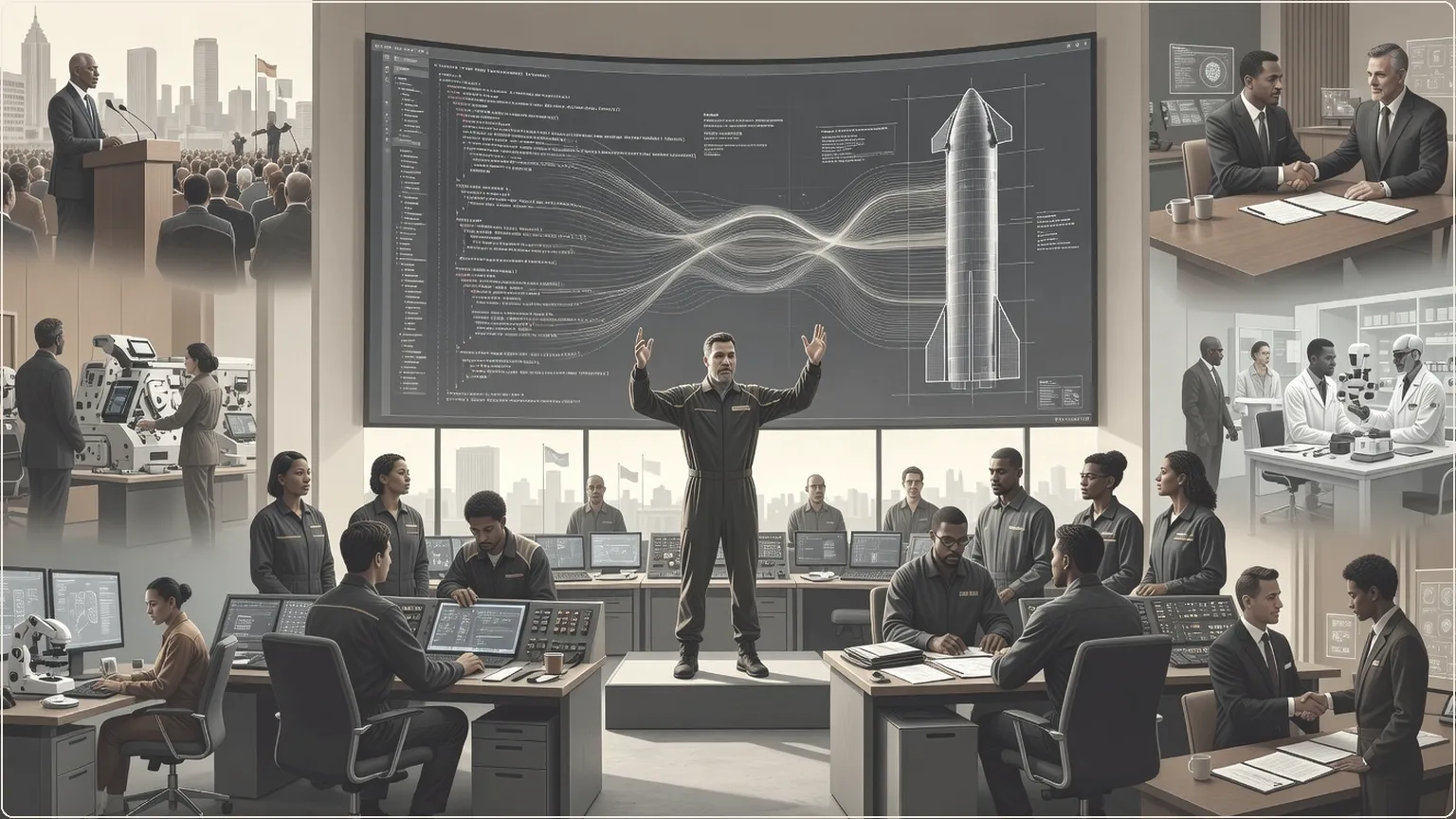
The deal structure is fascinating: SpaceX gets the option to buy Cursor outright for $60B or collaborate on joint development. Meanwhile, xAI brings GPU compute power to the table, potentially creating a coding agent that could rival GitHub Copilot and Claude.
What's really happening here is Musk positioning his companies for a world where software writes itself. SpaceX needs increasingly sophisticated software for everything from rocket control to Starlink management. Rather than hire more engineers, they're betting on AI that can code at superhuman levels.
What This Means For Your Business
We're witnessing the infrastructure layer for post-code development crystallize in real-time. NVIDIA's free model APIs, Tesla's unified AI stack, Google's agent platform, and SpaceX's coding AI bet all point to the same future: software that builds and maintains itself, with humans orchestrating rather than coding.
The companies moving fastest are those treating AI as infrastructure, not a feature. Tesla isn't building "AI-powered cars"—they're building cars that happen to be intelligent. Google isn't selling "AI tools"—they're selling business outcomes through agents. NVIDIA isn't just providing compute—they're becoming the platform where AI development happens.
If you're still thinking about AI as a tool to augment your existing processes, you're already behind. The winners are rebuilding their entire technology stack around AI-first assumptions. The question isn't whether to adopt AI—it's whether you're building for a world where judgment and orchestration matter more than code. Key takeaway: The companies treating AI as infrastructure rather than tooling are the ones reshaping entire industries.
Sources
- https://developer.nvidia.com/blog/minimax-m2-7-advances-scalable-agentic-workflows-on-nvidia-platforms-for-complex-ai-applications
- https://build.nvidia.com/minimaxai/minimax-m2.7
- https://catalog.ngc.nvidia.com/orgs/nim/teams/minimax-ai/models/minimax-m27
- https://www.notateslaapp.com/news/4033/tesla-fsd-v1432-unifies-fsd-models-across-robotaxi-and-customer-vehicles-improves-summon-and-adds-new-menu
- https://www.notateslaapp.com/software-updates/version/2026.2.9.8/release-notes
- https://x.com/Tesla_AI/status/2047322173459878356
- https://cloud.google.com/blog/products/ai-machine-learning/introducing-gemini-enterprise-agent-platform
- https://blog.google/innovation-and-ai/infrastructure-and-cloud/google-cloud/gemini-enterprise-agent-platform
- https://cloud.google.com/products/gemini-enterprise-agent-platform
- https://www.businessinsider.com/spacex-cursor-deal-what-smart-people-are-saying-2026-4
- https://www.msn.com/en-us/news/insight/xai-in-talks-with-mistral-cursor-amid-60b-buy-option/gm-GMEC2573A2
- https://www.techmeme.com/260422/p38
Stay ahead of AI
No spam. Unsubscribe anytime.
Want to go deeper?
Reading the news is one thing. Exploring the frontier is another. See what we're building.