
ByteDance Ships a Video Model That Doesn't Need You to Stitch Anything
Qwen Quietly Became the Most Downloaded AI Model Family on Earth. OpenAI Hits the Brakes on Astra Over Cyberattack Risk.
ByteDance Ships a Video Model That Doesn't Need You to Stitch Anything
Seedance 2.5 went fully live on July 31, and the headline spec is native 30-second single-pass generation — no stitching, no compositing tricks, just one continuous take [1]. It also supports up to 50 multimodal references, meaning creators can lock in characters, props, and style across a full generation rather than fighting consistency shot by shot. The API opened via BytePlus ModelArk in mid-July, with consumer access already live on Jimeng AI and Doubao Pro [2][3].
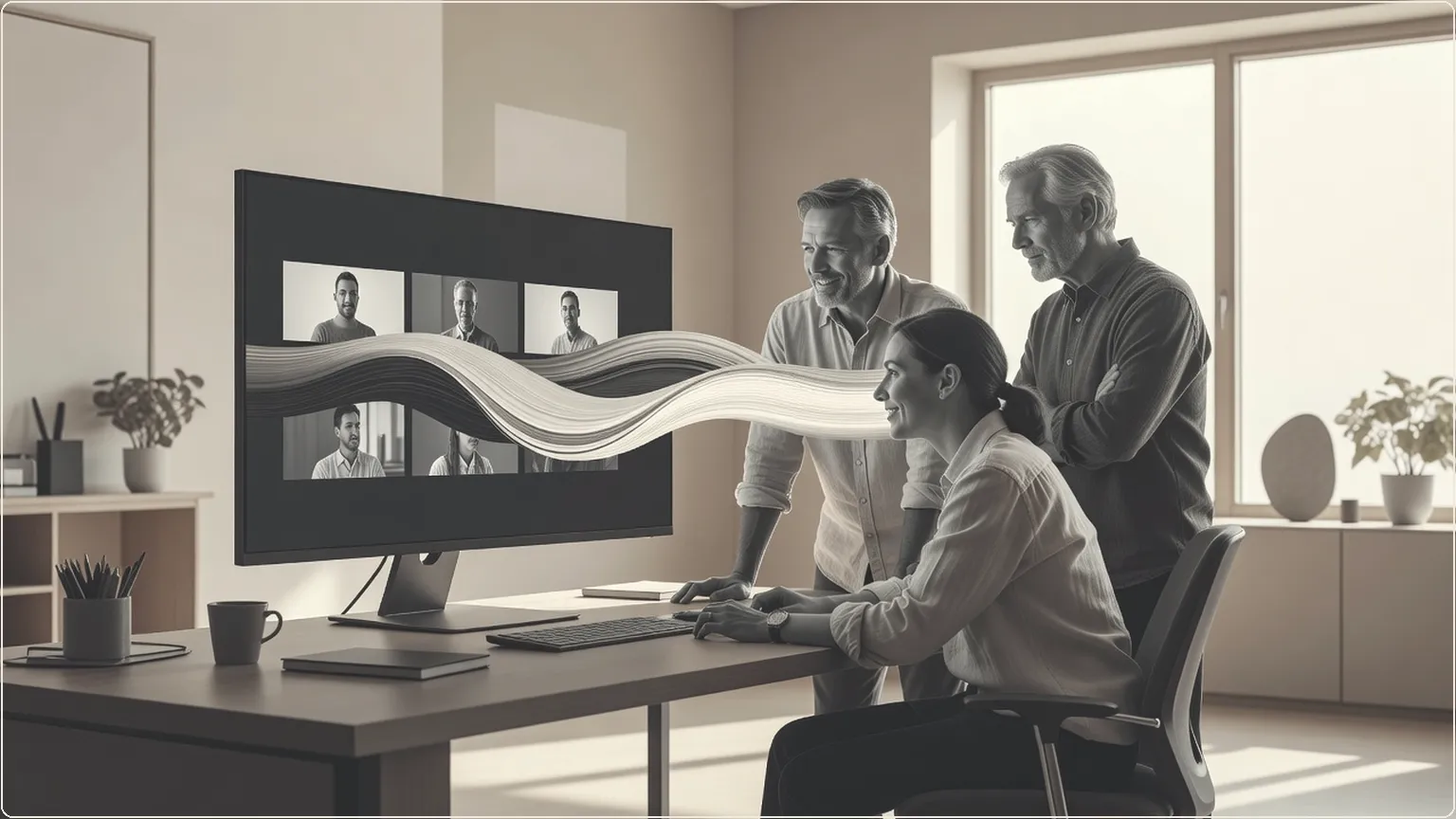
Agencies and creators are moving fast on this one, not just admiring it. The workflow implications are real: 30-second one-take generation collapses what used to be a multi-tool pipeline — generate, edit, composite, color — into a single prompt-and-wait step. That's the kind of compression that reorganizes entire freelance and agency workflows, not just a spec bump.
The unresolved part is the same one that's dogged every generative video model: copyright provenance on training data remains murky, and regulators haven't caught up [3]. Expect the creative excitement to keep outrunning the legal clarity for a while yet.
Qwen Quietly Became the Most Downloaded AI Model Family on Earth
Alibaba's Qwen models have crossed 3 billion downloads over the past six months, according to reports out this week — passing Meta and Google in open-weight distribution [1][3]. This isn't one flagship model; it's an ecosystem of 460+ open-sourced models and more than 300,000 derivatives, with Qwen3.8-Max (2.4 trillion parameters) pushing hard into coding and agent workflows [2].
The strategic shift worth noting: Alibaba stopped competing on "best single model" and started competing on "most forkable platform." Three billion downloads isn't people using Qwen directly — it's people fine-tuning it, embedding it, building businesses on top of it. That's a different kind of moat, and it's one Western labs with closed weights structurally can't match.
For builders, this matters more than the download count itself. When the base layer is open, free, and good enough, the value shifts entirely to what you build on top — the judgment calls in fine-tuning, deployment, and orchestration. Which is precisely the thesis this newsletter is named after.
OpenAI Hits the Brakes on Astra Over Cyberattack Risk
In early August, OpenAI confirmed it slowed internal work on Astra — its next major model, teased for solving long-standing math problems and handling long-running multi-agent tasks — after preliminary evaluations couldn't rule out "Critical" autonomous cyber capabilities [1][2]. This is the preparedness framework doing exactly what it was designed to do: catching a model that might be able to autonomously find and exploit vulnerabilities, and stopping to build more safeguards before shipping.
This is a meaningfully different situation than the usual "safety theater" delays. A model that can autonomously conduct cyberattacks is a categorically different risk than one that writes biased text or hallucinates facts — it's an actual security threat that scales with model capability, not model popularity.
X reaction split predictably between "this proves labs are serious about safety" and "this proves how close we are to genuinely dangerous capabilities" [2][3]. Both readings are probably right. The more interesting question is what this does to release timelines industry-wide — if OpenAI is pausing on cyber capability alone, every lab racing toward agentic, tool-using models needs the same evaluation gate, and that's going to slow the whole field down, at least publicly.
Anthropic Watermarks Everything, Everywhere, Because of One EU Law
Since August 2, every piece of text Claude generates carries an invisible statistical watermark, and every image or file carries C2PA metadata — a direct response to the EU AI Act's Article 50 transparency requirements [1][2]. The notable part isn't the watermarking itself; it's that Anthropic applied it globally, to all users, not just EU traffic [3].
This is the compliance pattern to watch for the next few years: rather than maintaining separate EU and non-EU product versions, labs are increasingly just building to the strictest jurisdiction's rules and shipping that everywhere. It's cheaper to maintain one codebase than two, and it quietly makes the EU AI Act a de facto global standard regardless of where a company is headquartered.
The skepticism on X is fair, though — statistical watermarks are trivially degraded by paraphrasing, translation, or running text through a second model [1]. This is a compliance checkbox more than a robust provenance solution right now. Worth watching whether regulators treat it as adequate or push for something harder to strip out.
What This Means For Your Business
Four stories today, one thread: the infrastructure layer underneath software development is being rebuilt for a world where agents, not humans, are the primary users. Cursor wants to own the repo. Alibaba wants to own the base model everyone forks. ByteDance is collapsing entire creative pipelines into single API calls. Even OpenAI's caution signals that the next generation of models is capable enough to need a security review before release. None of this is about better autocomplete anymore — it's about who controls the substrate agents operate on.
If you're a company still evaluating AI adoption as "which coding assistant should our devs use," you're solving last year's problem. The real decisions now are architectural: which model ecosystem do you build on (open weights you can fine-tune, or closed APIs you rent), which platforms do you trust with your repos and pipelines, and how much of your workflow are you willing to hand to orchestration rather than direct control. Qwen's 3 billion downloads and Seedance's one-take video generation both point the same direction — the differentiator is shifting from "can you produce the output" to "can you specify, evaluate, and steer the system producing it for you."
Regulation is following the same arc. Anthropic didn't watermark Claude for EU users — it watermarked Claude, period, because maintaining two versions of judgment is more expensive than building to the strictest bar once. Expect every serious AI vendor to make the same call, which means EU rules are becoming everyone's rules whether you're Nordic, American, or anywhere else.
Key takeaway: The tools are consolidating around agents as the primary user, not humans — which means the businesses that win won't be the ones who code best, but the ones who judge best: what to build, what to trust, and what to hand off.
Sources
- https://cursor.com/changelog/origin-code-hosting
- https://news.ycombinator.com/item?id=49334209
- https://cursor.com/origin
- https://seed.bytedance.com/en/blog/one-take-creation-flexible-referencing-introducing-seedance-2-5
- https://www.byteplus.com/en/product/seedance
- https://www.techtimes.com/articles/320683/20260716/seedance-25-api-live-bytedances-30-second-ai-video-carries-unresolved-copyright-risk.htm
- https://www.bloomberg.com/news/articles/2026-08-15/alibaba-ai-models-hit-3-billion-downloads-passing-meta-google
- https://qwen.ai/research
- https://www.moneycontrol.com/news/business/alibaba-s-qwen-ai-models-hit-3-billion-downloads-passing-meta-google-14006411.html
- https://www.axios.com/2026/08/07/openai-astra-model-delay-cybersecurity-risks
- https://www.cnbc.com/2026/08/10/openai-astra-cybersecurity-risks.html
- https://www.bleepingcomputer.com/news/artificial-intelligence/openai-teases-astra-its-next-major-ai-model-after-it-solves-10-long-standing-math-problems/
- https://www.euronews.com/next/2026/08/11/eu-compliance-delivered-globally-anthropic-to-watermark-claudes-output-worldwide
- https://techcrunch.com/2026/08/11/anthropic-says-it-will-watermark-text-generated-by-its-ai-models/
- https://support.claude.com/en/articles/16266773-how-claude-marks-ai-generated-content
Stay ahead of AI
No spam. Unsubscribe anytime.
Want to go deeper?
Reading the news is one thing. Exploring the frontier is another. See what we're building.