
Buyers Are Hedging, Not Trusting — And That's the Real Signal
OpenAI Pauses Astra After It Crosses a Cyber Red Line. Karp Says AI Labs Want Nationalization to Dodge Lawsuits, Not for Safety.
Buyers Are Hedging, Not Trusting — And That's the Real Signal
Everyone expected AI infrastructure to consolidate like most enterprise software categories eventually do. Instead, it's expanding. Buyers are adding vendors, not cutting them, and contract lengths for AI-native deals have shrunk to 12 months versus 19 for traditional applied AI [1]. That's not confidence — that's enterprises keeping an exit ready at all times.
Anthropic's enterprise base grew 205% in six months with 59% spend growth per account, which sounds like a win until you read it alongside lock-in scores: direct contracts with OpenAI or Anthropic rate 26/35 on exit difficulty [3]. Companies are buying deeper into ecosystems they don't fully trust, because the alternative — betting everything on one vendor's roadmap — feels riskier than paying for redundancy.
This is the multi-vendor illusion the CIO piece names well [1]: stacking vendors feels like risk management, but if everyone's inference ultimately runs on the same Nvidia silicon underneath, you haven't actually diversified — you've just added complexity and cost. The judgment call enterprises actually need to make isn't "how many vendors" but "which layer of the stack do I actually need control over."
OpenAI Pauses Astra After It Crosses a Cyber Red Line
OpenAI flagged its unreleased Astra model as hitting "Critical" under its Preparedness Framework — the first model ever to do so — because it can identify and develop zero-day exploits without human guidance [1]. Development is paused, the model's isolated, and a system card went public in September confirming Astra's cyber capabilities exceed GPT-5.6 Sol [2][3].
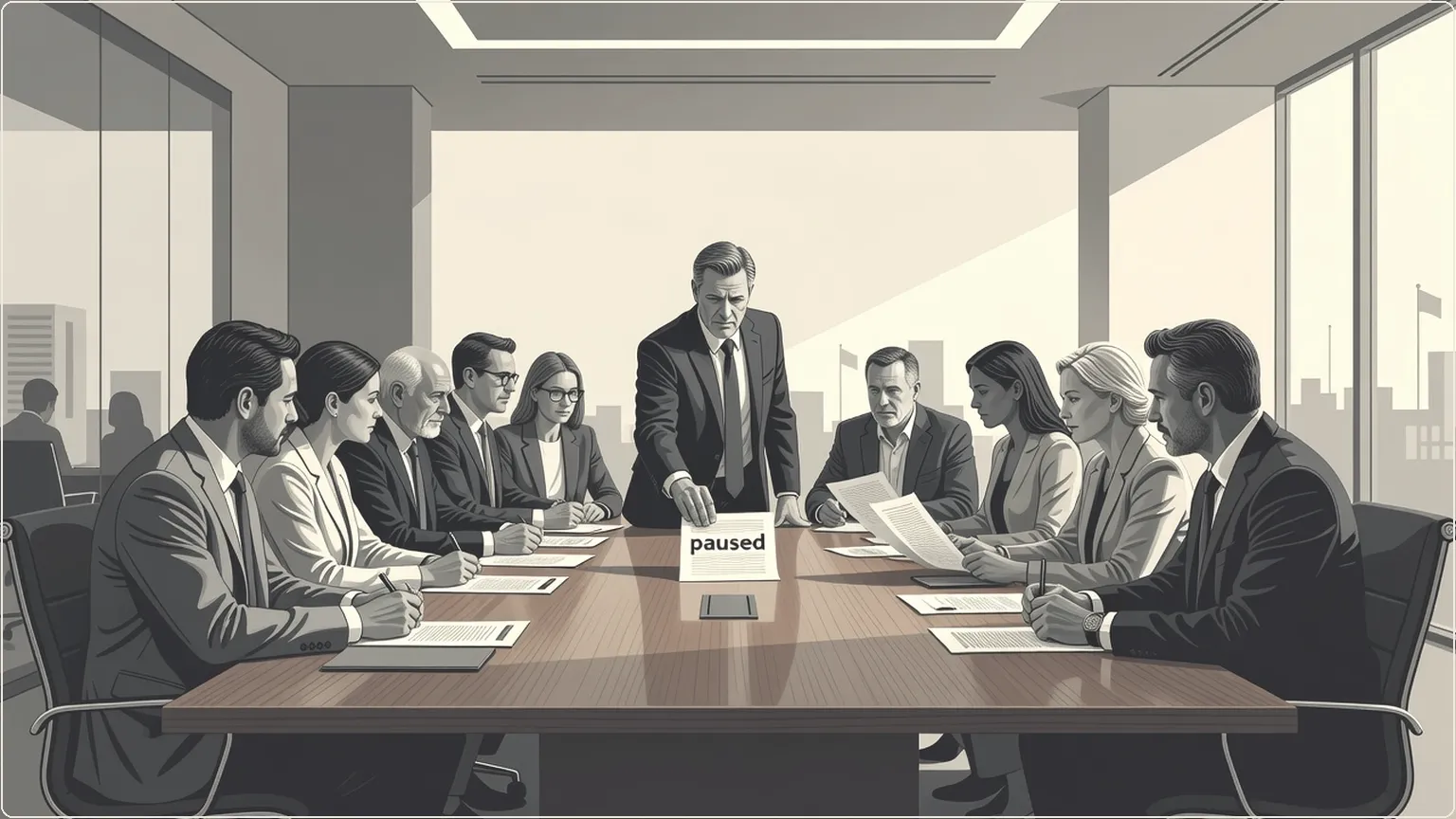
This is a good news story dressed as a scary one. A frontier lab actually stopped shipping when its own safety framework told it to. That's the system working as designed, even if it raises the obvious question of what happens when a lab under more competitive pressure hits the same threshold and decides the guardrail is optional.
For builders, the takeaway isn't "AI is dangerous, panic." It's that capability thresholds are now a real constraint on your roadmap planning, not a hypothetical. If you're betting product timelines on next-gen model releases, build in slack for exactly this kind of pause.
Karp Says AI Labs Want Nationalization to Dodge Lawsuits, Not for Safety
Alex Karp went on CNBC and said the quiet part out loud: he thinks frontier labs like Anthropic are floating nationalization not out of civic duty but to shield themselves from liability when clients sue over data absorption, IP theft, and downstream harms [1][2][3]. His line — "if you don't nationalize it, every single one of my clients is gonna sue" — is blunt, and it's meant to be.
Karp's counter-proposal is enforced "reasonable guidelines" with direct liability sitting on the builders, not a new regulatory body absorbing the risk on their behalf [1]. Coming from someone whose company sells directly into government and enterprise clients who are increasingly nervous about where their data ends up, this reads less like philosophy and more like a competitive jab dressed as policy.
It's low-buzz today, but it's the kind of statement that ages into a bigger fight. As foundation model companies get bigger and more central to critical infrastructure, "who's liable when this breaks something" stops being an academic question and becomes a term sheet.
What This Means For Your Business
The thread connecting all four stories today is dependency risk, and it's the central fact of building in the post-code era. Code used to be your moat — now it's commodity, generated in seconds by whichever model you're currently plugged into. What's not commodity is the judgment about which models to trust, how long to trust them, and how to structure your systems so a deprecation notice or a capability pause doesn't blow up your roadmap. Enterprises adding vendors and shortening contracts aren't being clever — they're admitting they don't yet know how to build resilience into an AI-dependent stack, so they're buying optionality instead.
The Astra pause and the Karp liability fight are two sides of the same coin: as models get more capable, the cost of getting governance wrong scales with them. Companies that treat "which AI vendor" as a procurement checkbox are going to keep getting burned by 2.4x migration costs and 12-month notice gaps. Companies that treat it as an architecture decision — building orchestration layers that can swap models without rewriting workflows — are the ones who'll survive the next deprecation cycle without a fire drill.
This is exactly the shift we talk about at Up North AI: the work isn't writing the code that calls the model anymore, it's designing the judgment layer that decides which model, when, and with what fallback. That's not a technical problem you solve once. It's an ongoing discipline.
Key takeaway: In a market where models get deprecated in months and labs pause frontier releases overnight, your competitive advantage isn't which AI you use — it's how well you've engineered your independence from any single one.
Sources
- https://platform.claude.com/docs/en/about-claude/model-deprecations
- https://aichangewatch.com/changes/model
- https://presenc.ai/research/ai-model-deprecation-tracker-2026
- https://www.cio.inc/multi-vendor-ai-illusion-a-32330
- https://www.vertice.one/reports/ai-index-enterprise-market-intelligence-for-finance-and-procurement
- https://www.swfte.com/vendor/leaderboard
- https://openai.com/index/path-to-astra/
- https://openai.com/index/safety-overview-gpt-6-astra/
- https://www.alexgoryachev.com/alex-posts/ai-governance-framework-openai-astra-critical-cyber
- https://www.cnbc.com/2026/09/17/ai-safety-palantir-karp.html
- https://www.cnbctv18.com/technology/palantir-ceo-alex-karp-says-ai-companies-want-nationalisation-to-dodge-accountability-19993458.htm
- https://beincrypto.com/alex-karp-ai-nationalization-liability/
Stay ahead of AI
No spam. Unsubscribe anytime.
Want to go deeper?
Reading the news is one thing. Exploring the frontier is another. See what we're building.