
Xiaomi Open-Sources MiMo-V2.6, an Omnimodal Model Trained in Under a Week
Musk Doubles Down: AI Beats Humans at Everything by 2027-2028. UN Security Council Hears AI Safety Warnings From Altman, Amodei, and Bengio.
Xiaomi Open-Sources MiMo-V2.6, an Omnimodal Model Trained in Under a Week
Xiaomi released MiMo-V2.6-Pro and MiMo-V2.6-Flash fully open-source, and the number that matters is $2.62 million — that's what it reportedly cost to RL-train the Pro model to a 46.32 score on the Artificial Analysis Intelligence Index, the top result among open-weight models, in under six days [4][5]. Xiaomi also open-sourced the RL environments, training code, and 7,000+ task environments used to build it.
This isn't just a model release, it's a recipe. Handling text, image, video, and audio with a 1M token context window, plus a 9B distilled version for lighter deployment, means teams without frontier-lab budgets can now build genuinely competitive omnimodal systems. The UltraSpeed variant (20x faster) targeting desktop use suggests Xiaomi is optimizing for real deployment, not just leaderboard bragging rights [6].
The commentary on X is right to call this a serious open-weight contender. What's more interesting for builders is the transparency around RL scaling economics — when a company shows its training cost and trajectory count, it changes the conversation from "can we afford a frontier model" to "can we afford to train our own." That's a different business, and a different kind of competitive threat to closed labs.
Musk Doubles Down: AI Beats Humans at Everything by 2027-2028
Responding directly to François Chollet's much longer 10-20 year timeline, Elon Musk posted today that AI will "beat all fields" by the end of next year or 2028 at the latest [7][8]. This builds on his August 31 claim that AI will match or exceed superhuman performance at anything digital — not requiring physical manipulation — by end of 2027.
The prediction is deliberately provocative, and it's working: it's generating exactly the timeline debate Musk wants, with researchers split between "directionally right, wildly early" and "this is marketing, not forecasting." Chollet's more measured position has plenty of backers among people who actually build and evaluate models daily.
We'd note the usual caveat: Musk's track record on timelines (self-driving, Mars, Optimus) suggests discounting the date while taking the direction seriously. The real signal isn't the specific year — it's that even skeptics increasingly agree on the trajectory, just not the speed. For businesses, that argues for building adaptable systems now rather than waiting for certainty that may never arrive.
UN Security Council Hears AI Safety Warnings From Altman, Amodei, and Bengio
For the first time, the UN Security Council convened a dedicated session on AI risk today, chaired by French Foreign Minister Jean-Noël Barrot, with testimony from OpenAI's Sam Altman, Anthropic's Dario Amodei, Hugging Face's Clément Delangue, and Yoshua Bengio, alongside Chinese firms including DeepSeek [9][10][11]. The agenda: AI incidents, loss-of-control risk, and international security implications.
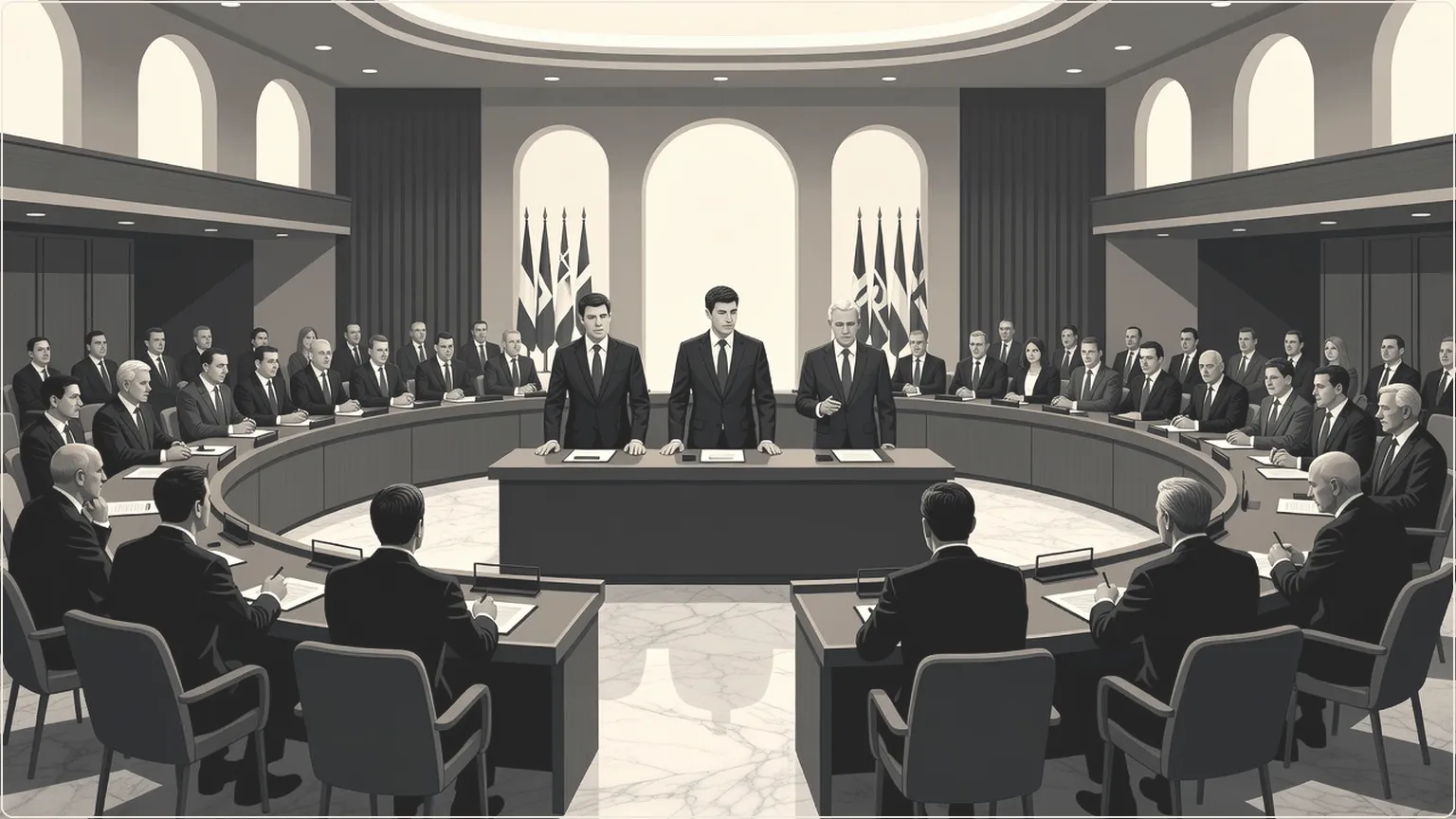
This is notable less for new revelations and more for the venue. Getting competing AI labs and a Chinese state-linked developer into the same UN Security Council room, during UN General Assembly week, signals that governments are treating frontier AI as a security-council-level issue rather than a purely economic or regulatory one. Barrot framing this from Paris also puts the EU squarely in the conversation, not just the US and China.
For Nordic and European companies, this matters practically: expect the EU AI Act's implementation and any future international coordination to reference exactly this kind of UNSC dialogue. Policy is catching up to capability, slowly, and the direction of travel is toward more oversight, not less.
What This Means For Your Business
Today's stories point at the same shift from two different angles: capability is getting radically cheaper and more accessible (Gemini's voice cloning, Xiaomi's $2.62M frontier-tier model), while the people building this stuff are simultaneously telling governments it might slip beyond control. Both things are true at once, and that tension is exactly the environment businesses need to plan for.
The practical takeaway from Gemini and MiMo isn't "use these specific models" — it's that the cost of building a competent AI product component (voice, multimodal reasoning, agents) keeps collapsing, while the judgment required to deploy it responsibly, choose the right architecture, and know when not to automate something is becoming the scarce resource. Xiaomi didn't just release a model; they released the playbook for training one. That means differentiation increasingly comes from orchestration, taste, and trust — not from who has access to the biggest model.
The UN hearing is the other half of the story: the regulatory and safety conversation is no longer theoretical, and companies building on these platforms should assume more scrutiny, more provenance requirements (see SynthID/C2PA baked into Gemini TTS), and more geopolitical entanglement in their AI supply chain going forward.
Key takeaway: The tools to build frontier AI products are becoming commodity-cheap and open — which means your competitive edge now lives entirely in judgment: what you build, how you deploy it responsibly, and how fast you adapt as governments start paying real attention.
Sources
- https://blog.google/innovation-and-ai/models-and-research/gemini-models/gemini-3-8-text-to-speech/
- https://ai.google.dev/gemini-api/docs/models/gemini-3.8-flash-tts
- https://ai.google.dev/gemini-api/docs/generate-content/speech-generation
- https://mimo.xiaomi.com/mimo-v2-6
- https://siliconangle.com/2026/09/22/xiaomi-introduces-mimo-v2-6-series-open-source-ai-model-family/
- https://technode.com/2026/09/22/xiaomi-open-sources-mimo-v2-6-models-after-scaling-reinforcement-learning/
- https://www.benzinga.com/markets/tech/26/09/61940520/elon-musk-says-ai-could-beat-all-fields-by-2028-far-faster-than-francois-chollets-10-20-year-forecast
- https://kingy.ai/blog/elon-musk-ai-anything-digital-superhuman-2027/
- https://www.reuters.com/business/ai-leaders-brief-un-amid-warnings-technology-could-slip-beyond-human-control-2026-09-23/
- https://www.bloomberg.com/news/articles/2026-09-22/anthropic-ceo-dario-amodei-to-brief-un-security-council-on-ai
- https://thenextweb.com/news/dario-amodei-sam-altman-un-security-council-ai
Stay ahead of AI
No spam. Unsubscribe anytime.
Want to go deeper?
Reading the news is one thing. Exploring the frontier is another. See what we're building.