
A Healthcare Company Just Proved Voice Agents Work at Production Scale
Jensen Huang Joins ElevenLabs on Stage in NYC. Nebius Buys a 10-Month-Old Startup to Kill the "Idle GPU Tax".
A Healthcare Company Just Proved Voice Agents Work at Production Scale
Forget demos. A U.S. healthtech company has run 61,246 autonomous AI voice calls for patient billing since launch, with 21,767 connected conversations and 420 hours of talk time, managing over 25,000 balances for nearly 12,000 patients [4]. The number that matters: 97% of those conversations close without a human touching them. Exceptions route to staff with full case history attached — no cold handoffs.
Cost per connected call: $0.071, including telephony and inference. That's not a pilot number, that's a line item. The system runs on shared context across voice, text, and email with 12 live tools for real-time actions — payments, reconciliations, scheduling — backed by serious QA and monitoring infrastructure [4]. McKinsey's framing this as part of a broader shift toward "touchless" revenue cycle management, with agentic AI cutting cost-to-collect by 30-60% industry-wide [4].
This is the story under the story: while everyone argues about frontier model benchmarks, production agentic systems are quietly eating entire back-office functions. X users are right to flag this as the real signal — not the lab result, the P&L result.
Jensen Huang Joins ElevenLabs on Stage in NYC
ElevenLabs confirmed that NVIDIA CEO Jensen Huang will sit down with co-founder Mati Staniszewski at the ElevenLabs Summit in New York on November 11 [5]. NVIDIA's been backing ElevenLabs' voice and audio models since 2022, and this is the most visible public marker yet of that partnership's weight [6].
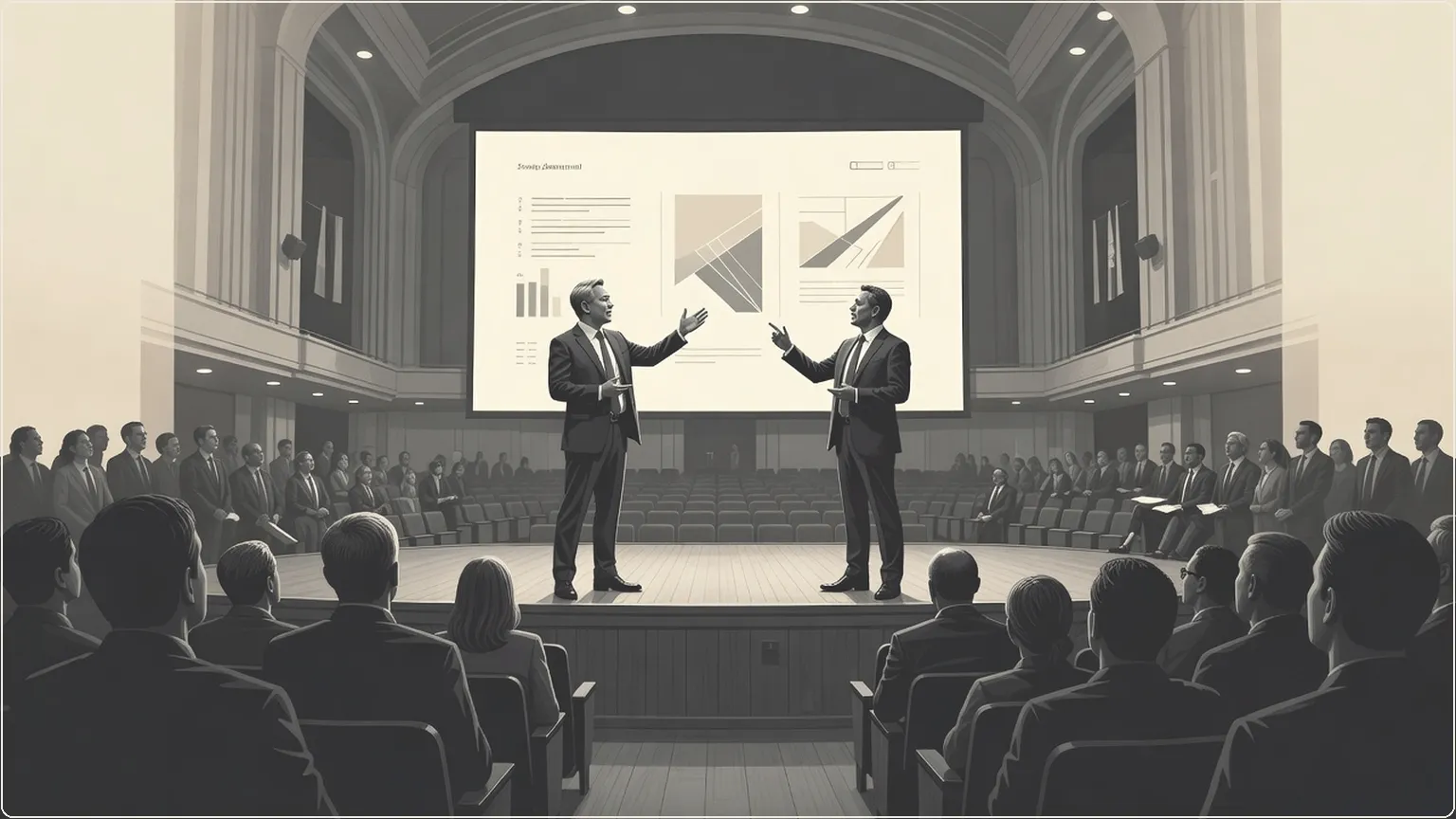
The summit itself — invite-only — is squarely focused on voice AI, conversational systems, and agentic workflows. Pairing the infrastructure layer (NVIDIA) with the voice layer (ElevenLabs) on one stage is a signal to enterprise buyers: voice agents aren't a bolt-on feature anymore, they're becoming core infrastructure. X reaction has focused less on the content of the talk and more on what it says about ElevenLabs' enterprise positioning heading into next year.
Nebius Buys a 10-Month-Old Startup to Kill the "Idle GPU Tax"
Nebius acquired Inferize, an Israeli inference-optimization startup, for an estimated $100-150 million — remarkable given the company is barely ten months old with 17 employees and was still in stealth [7][8]. Inferize's tech shortens model launch and scaling times and reduces cold starts, which translates directly into higher utilization on expensive GPU capacity [7].
This gets folded straight into Nebius Token Factory, its managed inference platform. CTO Danila Shtan called it a way to accelerate what's otherwise a slow, manual scaling process [7]. In a market where GPU capacity is the scarcest resource in AI, buying a team that makes your existing fleet work harder is arguably smarter than buying more chips. X discussion framed it correctly: this is an infrastructure efficiency play, not a flashy model release — but those are often the acquisitions that actually move margins.
EU AI Act Enforcement Is No Longer a Future Problem
As of August 2, 2026, the European Commission's AI Office has real teeth: investigative and enforcement authority over general-purpose AI providers and prohibited practices, with fines up to €35M or 7% of global turnover for the worst violations [9]. Investigations into high-risk systems — hiring tools, credit scoring, student monitoring — started back in June and are ongoing [10].
Article 50 transparency rules are now live too: chatbot disclosure and synthetic content labeling aren't optional anymore. High-risk system deadlines got pushed to late 2027/2028 via the Digital Omnibus, but don't read that as a grace period — the enforcement infrastructure itself is already operational [9]. X users are flagging real compliance gaps right now, notably missing Fundamental Rights Impact Assessments alongside standard DPIAs under Article 27 [10].
If you're a Nordic company building or deploying AI systems that touch EU users, this is the quarter to actually read Article 27, not skim it.
What This Means For Your Business
Three of today's four global stories are really one story: AI is shifting from "model that answers questions" to "system that closes loops." Argon freeing 300 TiB of data center memory, a healthcare voice agent closing 97% of billing conversations without a human, Nebius squeezing more throughput out of existing GPUs — none of these are chatbot wins. They're operational wins. The companies capturing value here aren't the ones with the best prompt library; they're the ones who've figured out how to wire models into real systems with real stakes, real exceptions, and real fallback paths to humans.
That's the orchestration shift in one sentence: the code to call an LLM is trivial now, and will keep getting more trivial as models like Argon ship with longer context and cheaper tokens. What's hard — and what's defensible — is the judgment layer: which 3% of calls need a human, how you structure context across voice/text/email, how you price and monitor an agentic system so it doesn't quietly degrade. The EU AI Act enforcement wave adds another dimension to that judgment: compliance isn't a checkbox anymore, it's an architecture decision, and it's being actively investigated right now, not someday.
For Nordic companies specifically, the message is blunt: you're operating under the world's strictest AI regulatory regime while competing with U.S. players who are moving at Argon-speed. That's not a disadvantage if you treat it correctly — compliance-by-design is a genuine moat when your competitors are bolting it on after an investigation letter arrives.
Key takeaway: The winners in this cycle aren't writing more AI code — they're building the judgment systems that decide when AI should act alone and when it shouldn't. That's the whole business now.
Sources
- https://blog.google/innovation-and-ai/models-and-research/gemini-models/gemini-4-argon/
- https://arstechnica.com/google/2026/09/google-announces-gemini-4-argon-ai-model-but-you-cant-use-it-yet/
- https://qz.com/google-gemini-4-argon-ai-model-cybersecurity-100126
- https://limestonedigital.com/case-studies/voice-agent-rcm
- https://elevenlabs.io/summit/new-york
- https://elevenlabs.io/events/elevenlabs-summit
- https://nebius.com/newsroom/nebius-acquires-inferize-to-strengthen-nebius-token-factorys-production-inference-stack
- https://www.calcalistech.com/ctechnews/article/byzggtiqgx
- https://digital-strategy.ec.europa.eu/en/policies/enforcement-ai-act
- https://blog.volkovlaw.com/2026/09/the-eu-ai-act-enforcement-is-no-longer-theoretical-part-i-of-ii/
- https://www.mckinsey.com/industries/healthcare/our-insights/agentic-ai-and-the-race-to-a-touchless-revenue-cycle
Stay ahead of AI
No spam. Unsubscribe anytime.
Want to go deeper?
Reading the news is one thing. Exploring the frontier is another. See what we're building.