
Perplexity's JOLT Makes Agent Training Dramatically Cheaper
Tesla's Q3 Shows the AI Roadmap Slipping — But the Market Doesn't Care Yet. OpenAI Doubles Down on Daybreak While Anthropic Takes Heat for Caution.
Perplexity's JOLT Makes Agent Training Dramatically Cheaper
Perplexity, working with NVIDIA, released JOLT on October 21 — a post-training method where a single model plays both teacher and student during reinforcement learning [1]. The headline number: JOLT matches GRPO's accuracy on MATH benchmarks using 6.5x fewer tokens, and the upgraded JOLT+ actually beats GRPO outright on coding, tool-use, and terminal tasks, including a +9.9 point jump on AppWorld [2][3].
The technical trick is solving credit assignment — giving per-token feedback instead of a single outcome-level reward — which is the thing that makes RL training agents so expensive and slow in the first place. Aravind Srinivas framed this as a token-efficiency win, and the agent-builder crowd on X zeroed in on the same thing: cheaper, faster RL loops mean smaller labs can compete on agent quality without GPU budgets the size of a hyperscaler's.
This matters more than it sounds. If training efficient agents gets 6x cheaper, the moat shifts further away from "who has the most compute" and toward "who has the best data and the clearest judgment about what good behavior looks like." That's a direct hit on the compute-is-everything narrative.
Tesla's Q3 Shows the AI Roadmap Slipping — But the Market Doesn't Care Yet
Tesla posted Q3 2026 revenue of $28.05B, flat year-over-year, with non-GAAP EPS of $0.48 beating estimates and — notably — positive free cash flow despite heavy AI spend [1][2]. The AI story underneath the earnings: unsupervised FSD for customer-owned cars now targets Q2 2027 (previously sooner), the Robotaxi fleet hit roughly 2 million cumulative unsupervised miles (8x quarter-over-quarter growth), and Optimus high-volume production — aiming for ~20,000 units/week — is now a "~1 year" target with external deliveries sliding to late 2027 [3].
Translation: the timelines moved right again, as they always do, but the underlying metrics (mile growth, cash flow) are strong enough that analysts raised price targets anyway. Elon Musk and the Tesla team leaned hard into the 2027 narrative — Terafab chip commissioning, AI5 hardware — betting that investors will keep extending patience as long as the trendlines point up.
The real signal for builders: Tesla's Robotaxi mileage scaling 8x in a single quarter is the kind of compounding curve that's easy to dismiss until it isn't. Autonomy is still a hardware-plus-judgment problem, not a pure software one, and Tesla's slipping dates are a reminder that "the model works in the lab" and "the model works unsupervised at scale" remain very different bars.
OpenAI Doubles Down on Daybreak While Anthropic Takes Heat for Caution
OpenAI's expanded Daybreak program — now split into Blue and Red tiers — gives vetted security researchers access to frontier models like GPT-5.6-Cyber for real offensive and defensive work: exploit chains, vulnerability research, the works [1][2]. The compliance numbers are the story here — 95% task compliance from approved researchers versus 1.5-2% on standard consumer-facing models, meaning OpenAI built an entirely separate trust tier rather than loosening guardrails for everyone [3].
The framing in the research — and in the X discourse — explicitly contrasts this with Anthropic's more conservative safety classifiers, which researchers say block comparable vulnerability work outright. It's a genuinely interesting fork in safety philosophy: gatekeep access tightly but give real capability to the vetted few, versus apply blanket restrictions that are safer by default but frustrate legitimate security researchers.
Security researchers on X were vocal about preferring OpenAI's approach — not because they want fewer guardrails everywhere, but because "no" isn't a defensive cybersecurity strategy. As defenders race attackers who already have frontier models, this is a preview of a fight every AI lab will have to have: trust tiers aren't a nice-to-have, they're becoming infrastructure.
EU Parliament Fractures Over AI Act Liability Rules
The European Parliament spent October 22 debating AI Act implementation, and the coalition cracks are showing: center-right MEPs are pushing to simplify rules for competitiveness, while center-left and Green factions want to revive the AI Liability Directive to make harm accountability enforceable [1][2]. Risk-tier classifications and delays to high-risk category enforcement were central to the fight, alongside pressure to align with G7, UN, and US/China frameworks on cybersecurity and extraterritorial reach.
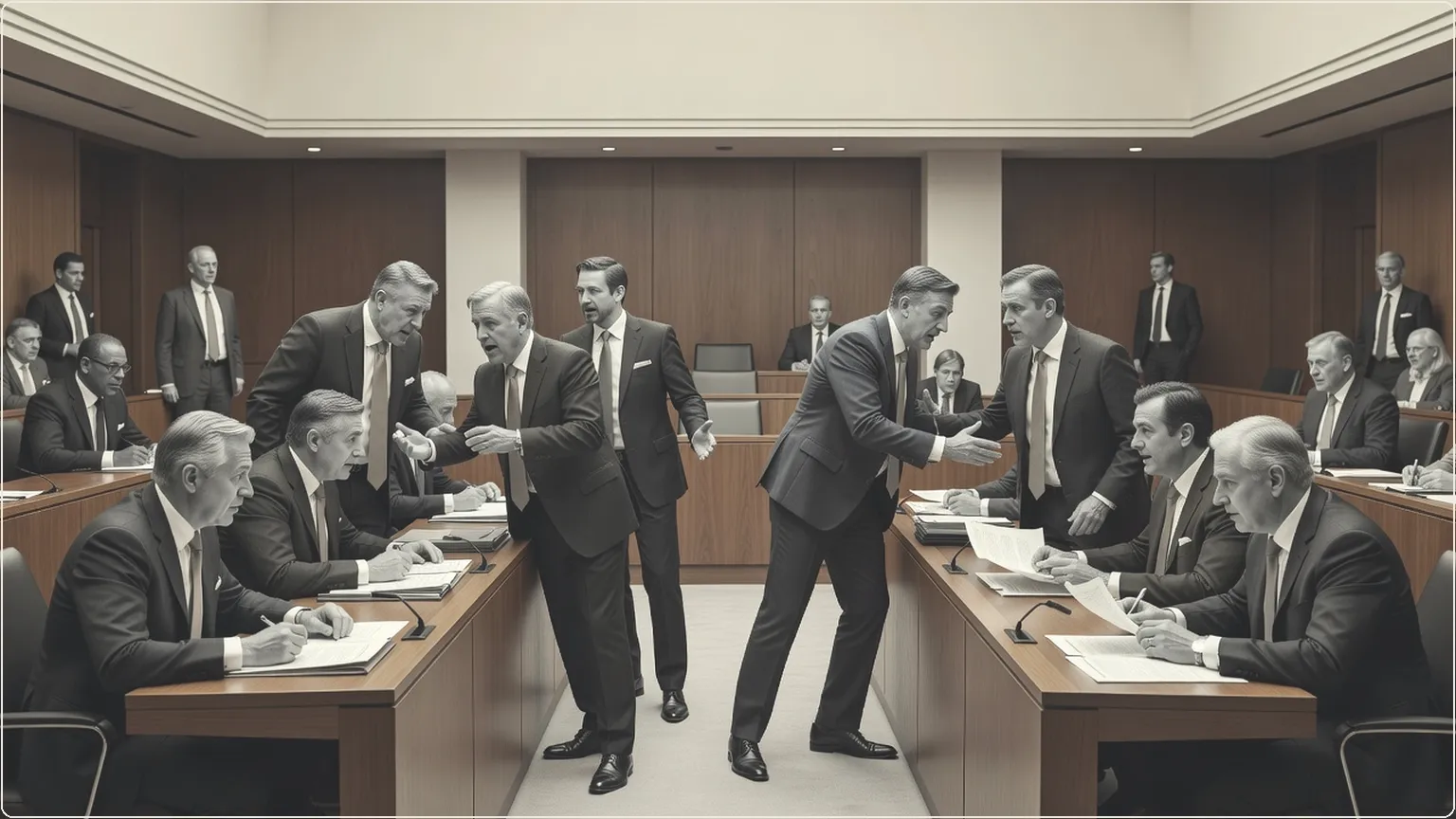
For Nordic AI builders, this is the fork in the road that actually matters more than any US product launch this week. If liability rules get watered down in the name of competitiveness, European companies get a lighter compliance load but less legal clarity about who's on the hook when an agent screws up a financial transaction or a medical recommendation. If the Liability Directive comes back with teeth, compliance gets harder but the rules of engagement get clearer — which, frankly, most serious builders would prefer over ambiguity.
What This Means For Your Business
Four stories, one thread: the unit of work is shifting from "write the code" to "supervise the agent." Claude Duet acts without being asked. JOLT makes training those agents radically cheaper. Tesla's robotaxi fleet is racking up millions of unsupervised miles. OpenAI is building trust tiers to let vetted agents do dangerous-adjacent work safely. None of these are about better autocomplete — they're about systems that act, and the infrastructure needed to let them act responsibly.
If you're running a company and still thinking about "AI strategy" as a feature checklist — add a chatbot, ship a copilot — you're behind the actual shift happening this week. The real question isn't "can AI write this code or draft this email," it's "how much judgment am I willing to delegate, under what approval gates, with what liability exposure." Anthropic's answer is human approval for sensitive actions. OpenAI's answer is tiered trust for vetted researchers. The EU's answer is still being argued in Brussels. Your answer needs to exist before a customer asks you what happens when your agent makes a mistake at 2am.
The companies that win this transition won't be the ones with the best model — model quality is commoditizing fast, as JOLT's efficiency gains show. They'll be the ones with the clearest internal judgment about what to automate, what to gate, and what to never hand off. That's not a technical decision. It's an organizational one.
Key takeaway: Code is getting cheap and agents are getting proactive — which means the scarce resource in your organization is no longer engineering hours, it's the judgment to decide what an AI is allowed to do without asking first.
Sources
- https://claude.com/resources/articles/claude-duet
- https://techcrunch.com/2026/10/22/claude-duet-app-is-anthropics-bet-on-agents/
- https://www.reuters.com/technology/anthropic-unveils-claude-duet-ai-agent-app-2026-10-21/
- https://www.perplexity.ai/hub/blog/a-good-teacher-meets-the-student-where-they-are
- https://x.com/AravSrinivas/status/2113013527418146913
- https://www.marktechpost.com/2026/09/25/perplexity-trains-its-computer-agent-on-real-mistakes-with-hint-guided-self-distillation/
- https://www.fool.com/earnings/call-transcripts/2026/10/22/tesla-tsla-q3-2026-earnings-call-transcript/
- https://www.reuters.com/business/media-telecom/tesla-revenue-beats-estimates-deliveries-rebound-energy-storage-grows-2026-10-21/
- https://cleantechnica.com/2026/10/21/tesla-reports-a-great-3rd-quarter-robotaxi-fsd-finally-taking-off/
- https://openai.com/index/expanding-daybreak-as-the-cyber-defense-window-narrows/
- https://siliconangle.com/2026/08/10/openai-expands-daybreak-cybersecurity-research-program/
- https://www.techradar.com/pro/security/openai-extends-daybreak-security-project-and-reveals-new-cyber-model-but-for-approved-users-only
- https://www.politico.eu/article/ursula-von-der-leyen-coalition-fractures-over-need-for-ai-liability-rules/
- https://techpolicy.press/european-parliament-divided-on-how-to-govern-ai-at-home-and-abroad
Stay ahead of AI
No spam. Unsubscribe anytime.
Want to go deeper?
Reading the news is one thing. Exploring the frontier is another. See what we're building.