
Microsoft Goes All-In on Model Independence
Microsoft Goes All-In on Model Independence. Generalist AI Raises $400M, Physical AI Gets Real Money.
Microsoft Goes All-In on Model Independence
Microsoft just announced seven new MAI models at Build 2026, and the subtext is clear: they're done being OpenAI's biggest customer [5][6]. The lineup includes MAI-Thinking-1 for reasoning, MAI-Code-1-Flash (137B params, 5B active) for GitHub Copilot, and variants for image, voice, and transcription tasks.
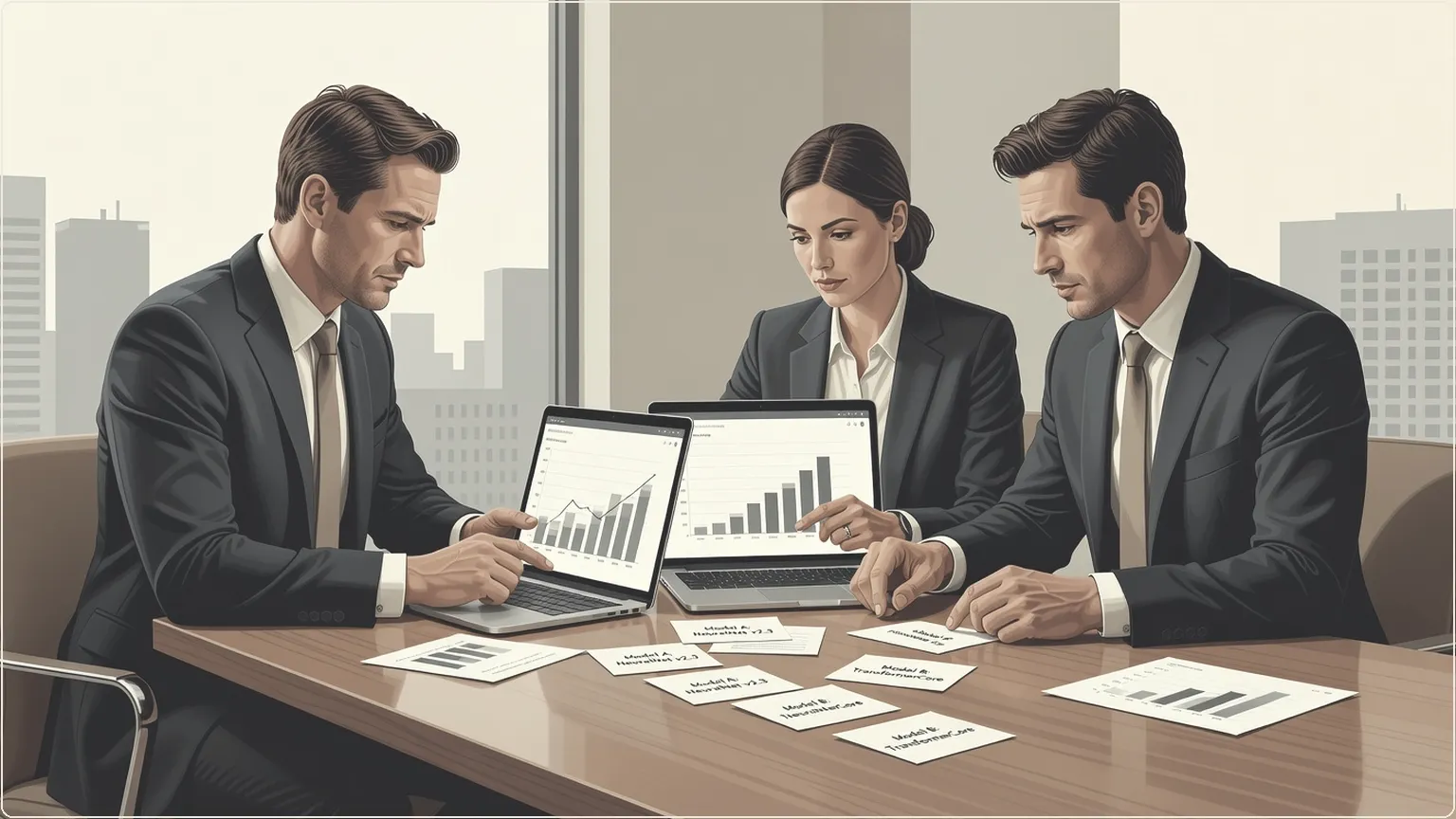
The key detail: these models use "clean licensed data" with no distillation from third-party models [6]. Microsoft is building from scratch to own their AI stack completely. MAI-Code-1-Flash will power the next generation of GitHub Copilot and VS Code integration, while MAI-Thinking-1 is already rolling out to select enterprise partners.
This is Microsoft's declaration of AI independence. They've learned from being dependent on OpenAI's roadmap and pricing. Now they control the entire pipeline from model training to enterprise deployment, with cost and performance optimized for their specific use cases.
Generalist AI Raises $400M, Physical AI Gets Real Money
A San Francisco robotics startup called Generalist AI just closed $400 million at a $2 billion valuation, with NVIDIA's NVentures leading alongside Bezos Expeditions and Fei-Fei Li [7][8]. They're building GEN-1, a foundation model for embodied robot learning that can handle complex physical tasks.
The funding round perfectly times with NVIDIA's Cosmos 3 release. We're seeing the physical AI stack come together: foundation models for world simulation, massive funding for robotics applications, and the compute infrastructure to train it all. This isn't lab research anymore — it's a coordinated industry push toward robots that can actually work in unstructured environments.
The investor lineup tells the story. NVIDIA wants customers for their robotics compute platform. Bezos sees the Amazon warehouse automation potential. Fei-Fei Li understands the computer vision foundations. Everyone's betting that 2026 is when physical AI moves from demos to deployment.
What This Means For Your Business
The pattern is unmistakable: AI is moving from generating content to controlling systems. NVIDIA's Cosmos 3 enables robots that understand physics. Microsoft's MAI models power agents that write and deploy code. Generalist AI builds robots that manipulate the physical world. We're transitioning from AI that assists humans to AI that operates independently.
For companies, this means rethinking your AI strategy beyond chatbots and content generation. The winners will be those who figure out how to orchestrate these new AI capabilities — combining world models, reasoning systems, and action models into workflows that actually run businesses. The losers will still be asking their AI to write emails while competitors deploy AI that manages entire operational processes.
The Nordic advantage here is clear: strong engineering cultures, regulatory frameworks that encourage experimentation, and industrial bases perfect for physical AI deployment. But the window for building AI-native operations is narrowing fast. Key takeaway: Start thinking about AI as infrastructure that runs your business, not tools that help your employees.
Sources
- https://www.nvidia.com/en-us/ai/cosmos/
- https://developer.nvidia.com/blog/develop-physical-ai-reasoning-world-and-action-models-with-nvidia-cosmos-3/
- https://research.nvidia.com/labs/nemotron/Nemotron-3-Ultra/
- https://www.axios.com/2026/06/01/nvidia-ai-push-cosmos-3-world-model
- https://microsoft.ai/news/microsoft-build-2026-mai-keynote-transcript/
- https://www.cnbc.com/2026/06/02/microsoft-unveils-new-ai-models-lessen-reliance-on-openai-lower-costs.html
- https://www.bloomberg.com/news/articles/2026-06-04/nvidia-backed-robotics-startup-generalist-ai-valued-at-2-billion
- https://qz.com/generalist-ai-funding-robotics-nvidia-bezos-060526
Stay ahead of AI
No spam. Unsubscribe anytime.
Want to go deeper?
Reading the news is one thing. Exploring the frontier is another. See what we're building.