
AMD Unveils Helios Rack-Scale AI System Powered by MI450 Series
Frontier Model Race Heats Up: Claude Opus 5, Qwen 3.8, DeepSeek V4. AI Coding Agents Adoption: Claude Code, Cursor, Codex Lead Workflows.
AMD Unveils Helios Rack-Scale AI System Powered by MI450 Series
AMD is making its most serious hardware play yet against Nvidia with Helios, a rack-scale system built around the MI450 series (MI455X, MI430X variants) [1]. Engineering samples and low-volume runs are targeted for H2 2026, with mass production and "first tokens" reportedly slipping to Q2 2027 depending on who you ask [1][2].
The partnerships are what make this credible rather than aspirational: Meta has committed to 6GW of custom MI450-derived GPUs shipping in H2 2026, and Oracle is standing up 50,000-GPU MI450 superclusters by Q3 2026 [2][3]. That's real capital behind real silicon, not a roadmap slide.
X commentary is cautiously optimistic — late-Q3 shipments are being read as AMD finally fielding something that can dent Nvidia's grip on AI infrastructure, though nobody's calling it a takeover yet. The timing matters: as demand for inference compute keeps outpacing supply, a credible second source changes pricing leverage across the entire stack.
Frontier Model Race Heats Up: Claude Opus 5, Qwen 3.8, DeepSeek V4
DeepSeek keeps undercutting everyone on price. V4, released April 24, ships in two flavors — V4-Pro (1.6T total params, 49B active) and V4-Flash — with output pricing around $3.48/M tokens, aggressive enough to keep reshaping expectations for what "frontier" should cost [1][3].
Claude Opus 5 is expected in Q3 2026, aimed squarely at agentic and coding workloads, with Qwen 3.8 rumored close behind [2]. X speculation has been running hot that one or more of these could drop within days — the kind of pre-launch anticipation that's become its own genre of AI discourse.
The pattern worth noting: every lab is now competing on the same three axes — agentic capability, coding performance, and cost per token — rather than raw benchmark bragging rights alone. That convergence is arguably more significant than any single release.
AI Coding Agents Adoption: Claude Code, Cursor, Codex Lead Workflows
Paid coding agents have quietly become default infrastructure. Claude Code, Cursor, Codex, and Copilot are all seeing sustained daily use, and GPT-5.6 Sol's coding benchmarks are reinforcing that these tools are now judged on workflow fit, not novelty [1][2].
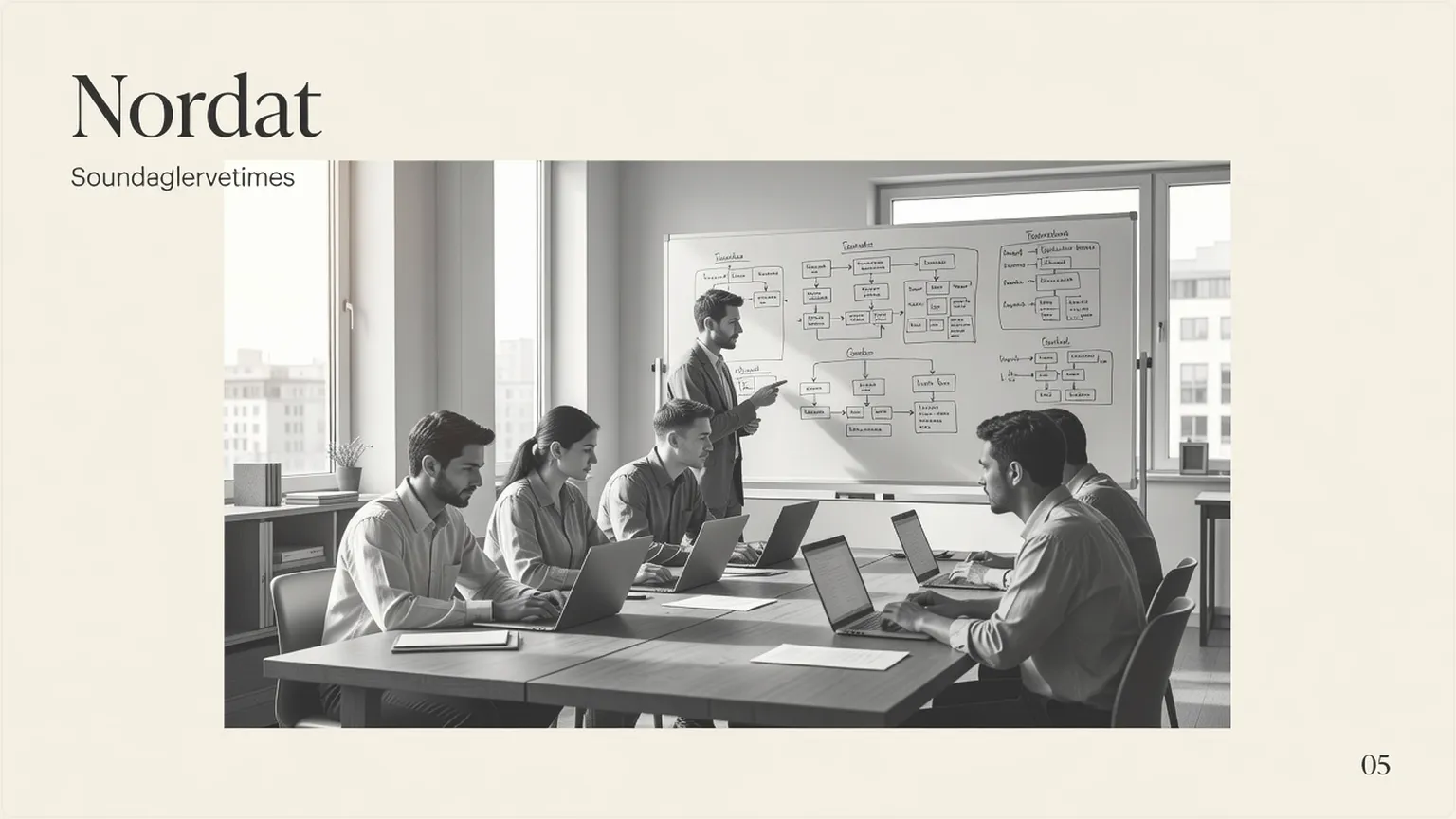
The debate on X isn't "should we use an AI coding agent" anymore — it's which one, for which job, at what cost. Vibe-coding tutorials building entire apps with Codex are being shared as proof points, not curiosities.
That shift — from "can it code" to "which agent orchestrates my stack best" — is the quiet story underneath every benchmark headline this month.
What This Means For Your Business
Every story today points the same direction: the bottleneck is no longer whether AI can write good code — it clearly can, cheaply, at Sol and DeepSeek V4 price points — the bottleneck is who's directing it well. Sol's subagent Ultra mode, the coding agent adoption curve, the imminent Opus 5 and Qwen releases — all of it is infrastructure for orchestration, not just generation. The companies pulling ahead right now aren't the ones with the best prompts. They're the ones who've built the judgment layer: what to build, what to trust, what to ship, and what to throw away.
That has a direct implication for hiring and tooling decisions this quarter. If Terra matches last quarter's flagship at half the cost, and DeepSeek is undercutting everyone further still, the economics of "just use the biggest model" are collapsing — the real differentiator is your orchestration layer, your evals, your taste in what a good output looks like. AMD's Helios push matters for the same reason: cheaper, more available compute lowers the floor for everyone, which means the ceiling is set entirely by how well you deploy it, not whether you can access it.
None of this is abstract for Nordic companies watching from the sidelines. The tools are commoditizing fast. The judgment about how to use them isn't.
Key takeaway: Code is getting cheap and fast enough that writing it is no longer the job — orchestrating it, judging it, and knowing what not to build is.
Sources
- https://openai.com/index/gpt-5-6/
- https://openai.com/index/previewing-gpt-5-6-sol/
- https://www.coderabbit.ai/blog/gpt-5-6-sol-and-terra-benchmark
- https://www.nextplatform.com/compute/2026/02/23/amd-says-helios-racks-and-mi400-series-gpus-on-track-for-2h-2026/4092199
- https://www.amd.com/en/corporate/events/advancing-ai.html
- https://www.oracle.com/news/announcement/ai-world-oracle-and-amd-expand-partnership-to-help-customers-achieve-next-generation-ai-scale-2025-10-14/
- https://alexlavaee.me/blog/deepseek-v4-architecture-benchmarks-engineer-verdict/
- https://www.skillboss.co/upcoming-models
- https://origami.sa/en/blog/deepseek-v4-vs-claude-opus-vs-gpt-5-5/
Stay ahead of AI
No spam. Unsubscribe anytime.
Want to go deeper?
Reading the news is one thing. Exploring the frontier is another. See what we're building.