
Karpathy's Bio Change Breaks the Internet, Reveals Nothing
Andrew Ng Draws a Line on Open Source vs. Gatekeeping. Multi-Agent Systems Move From Demo to Default.
Karpathy's Bio Change Breaks the Internet, Reveals Nothing
Andrej Karpathy updated his X bio on July 26 and the AI world briefly lost its mind, spinning up a rumor that he'd resigned from Anthropic. He hadn't. Karpathy shot down the speculation directly, criticizing the misinformation cycle and noting — with some amusement — how unusual it is that a bio tweak alone can generate this much noise [1][2][3].
The real story isn't the bio. It's what the reaction says about the field right now: every signal from a handful of high-trust voices gets treated as a potential earthquake, because the pace of actual announcements has trained everyone to expect one at any moment.
Worth remembering next time a "just updated my bio 👀" post hits your feed: verify before you republish. The AI news cycle rewards speed over confirmation, and that's exactly how debunked rumors get three news cycles of life.
Andrew Ng Draws a Line on Open Source vs. Gatekeeping
Andrew Ng waded into the open-source AI debate this month with a position that's simple but pointed: you have every right to keep your own code private, but you don't have the right to stop others from open-sourcing theirs. The post crossed 10,000 likes and reignited a familiar fight over regulation, collaboration, and who actually benefits when AI development gets locked down [1][2][3].
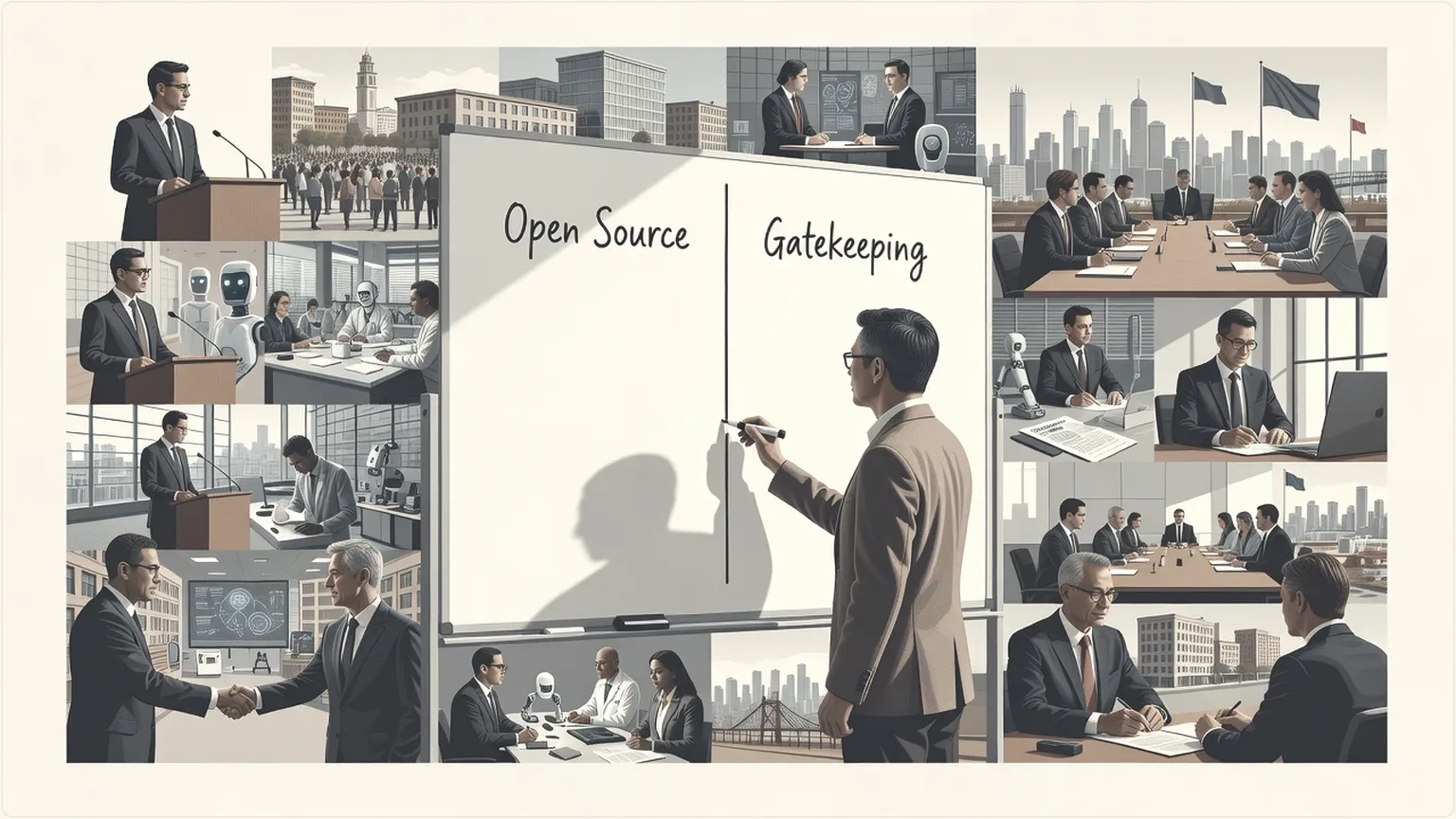
This isn't an abstract philosophical stance — it's a direct response to regulatory proposals that would raise compliance costs for open releases, effectively protecting incumbents who can afford the overhead. Ng's framing shifts the debate from "should AI be open" to "who gets hurt when it isn't."
For smaller AI shops and independent builders, this is the fight that determines whether the next five years look like the open web or a walled garden. Worth watching closely, and worth having an opinion on.
Multi-Agent Systems Move From Demo to Default
The quieter but arguably bigger story this month: multi-agent orchestration is becoming standard infrastructure, not a research curiosity. Builders are shipping production-ready pipelines with MCP modules for tools like Claude Code, and self-healing agents designed to run unattended, 24/7 [1].
This is the practical, unglamorous version of the "agentic AI" narrative everyone's been hyping for two years — less about a single genius model and more about plumbing: retries, handoffs, monitoring, and tool integration that lets agents run without a human catching every failure.
If you're still evaluating AI as "which model is smartest," you're asking the wrong question. The teams pulling ahead are asking "how do I orchestrate five mediocre agents into one reliable system" — which is a systems engineering problem, not a model selection problem.
What This Means For Your Business
Every story today points at the same shift: the unit of value is moving from "writing code" to "directing systems that write and run code for you." ChatGPT coordinating a trip, agents self-healing in production, open-source fights over who controls the building blocks — these are all facets of the same transition. The code itself is becoming commodity. What's scarce is the judgment to know what to build, what to automate, and when to intervene.
For companies still hiring and organizing around "who can write the best code," this is the wake-up call. The competitive edge is shifting to teams who can orchestrate multi-agent pipelines, define good guardrails, and make fast calls about which parts of a workflow to hand to AI versus keep human. That's a different skill set than engineering excellence alone — it's closer to product judgment plus systems thinking.
The Karpathy bio saga is a useful side note here too: in a market this jumpy, the ability to stay calm, verify signal from noise, and not overreact to every tweet is itself a competitive advantage. Judgment isn't just about building — it's about reading the room correctly while everyone else panics.
Key takeaway: The winners in this market won't be the ones who code fastest — they'll be the ones who orchestrate smartest and keep their heads while the news cycle doesn't.
Sources
- https://www.businessinsider.com/sam-altman-openai-third-phase-plan-2026-6
- https://www.theneurondaily.com/p/sam-altman-just-laid-out-openai-s-plan-for-2026
- https://www.youtube.com/watch?v=fsvpUQDdC8Q
- https://explainx.ai/blog/karpathy-anthropic-resignation-rumor-debunked-july-2026
- https://x.com/karpathy/status/2081195664479068350
- https://digg.com/tech/0bska96l
- https://linuxsecurity.com/news/security-trends/the-role-of-regulation-in-open-source-ai-development
- https://www.reddit.com/r/LocalLLaMA/comments/1d9w77g/andrew_ng_defends_open_source_ai_says_regulations/
- https://x.com/AndrewYNg/with_replies?lang=en
- https://chandlernguyen.com/blog/2026/04/16/two-years-after-my-7-andrew-ng-courses-the-2026-path-id-actually-take/
Stay ahead of AI
No spam. Unsubscribe anytime.
Want to go deeper?
Reading the news is one thing. Exploring the frontier is another. See what we're building.